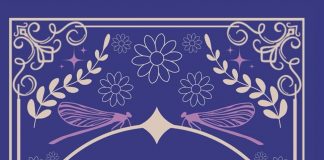

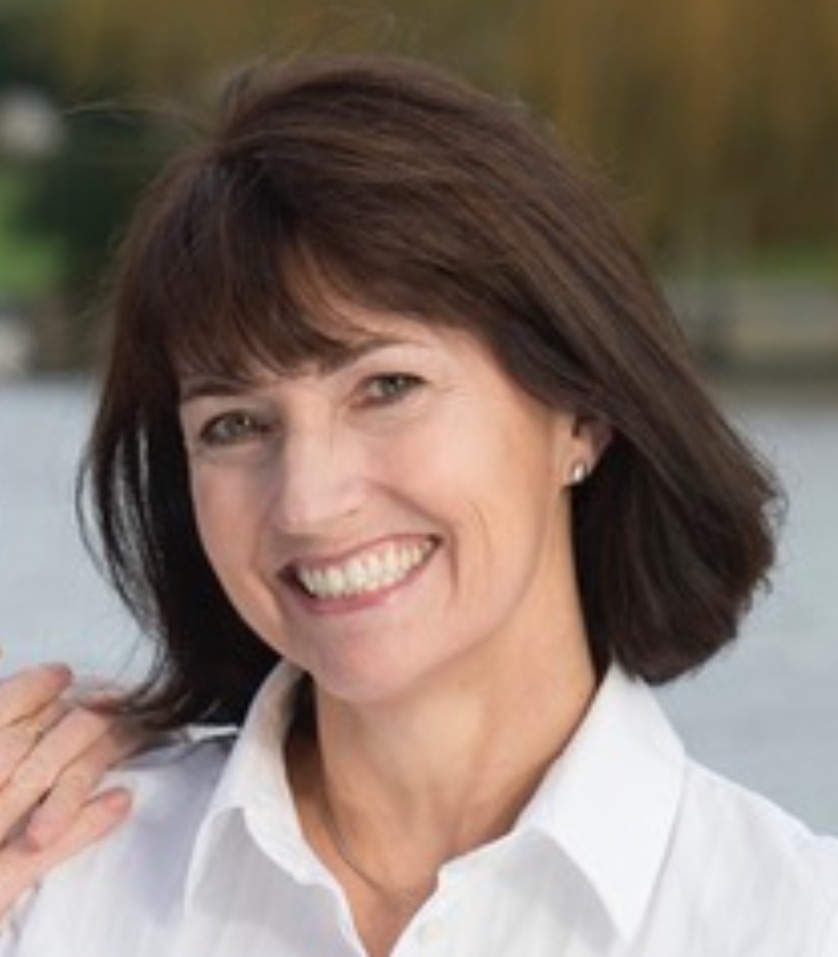
Julia Blackburn has been quietly building a reputation for imaginative, emotionally rich storytelling that blends nature, mystery, and heartfelt character journeys. With The Lost Dragonflies and The Songbird Army, she invites readers into worlds where courage is tested, friendships matter, and the smallest creatures can spark the biggest adventures.
We caught up with Julia to talk inspiration, worldbuilding and the magic behind her stories.
Quick Facts about Julia Blackburn
FAVOURITE BOOK: The Last Wild by Piers Torday
FAVOURITE AUTHOR: Piers Torday
FAVOURITE FOOD/MEAL: A bacon sandwich after a long early morning walk!
FAVOURITE ANIMAL: Donkey
FAVOURITE MOVIE: Tarka the Otter
CELEBRITY CRUSH: David Attenborough
If you could start by introducing yourself to everyone, let them know where you’re from and some of your interests and hobbies.
Hello from Berkshire! Thank you so much for having me. I absolutely love your website and all the books you review on here.
So – a bit about me. I was born and brought up on a farm in Somerset, but now live in Berkshire on the banks of the River Thames where I can idle away hours watching wildlife when I should be writing.
I am an enthusiastic – but very amateur – bird watcher, I love walking my dog Muttley, and really enjoy gardening, although most of the time I am looking skywards at the beautiful red kites that swoop and swirl over our house every day.
What inspired you to start writing?
I have adored storytelling since I was a child, and still have my first stapled together ‘book’ called The Frog Who Lost His Croak! I am – and always have been – inspired by the magic of nature and this fascination is threaded through all my storytelling.
What is your preferred genre to write in?
I love writing children’s magical realism fiction, for ages 8-12.
What first sparked the idea for The Lost Dragonflies and The Songbird Army — was there a single moment of inspiration or did the stories grow slowly over time?
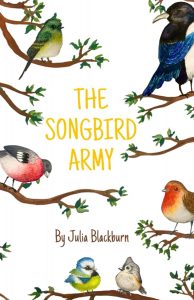
The Songbird Army – when he started primary school, my son Ben was obsessed with birds and carried his Observers Book of Birds everywhere. He had trouble making friends because he spent his whole time trying to make them look at his bird book! Most of them just wanted to play football! So I did a deal with him – if he would go to school without his bird book (I had to prise it off him!) I would write him a novel about his favourite birds. We both kept our side of the deal. The Songbird Choir Series was born, and I am happy to say Ben now has many friends and plays a lot of football!
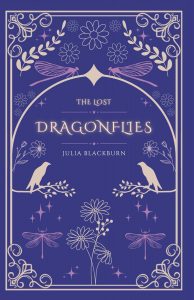 The Lost Dragonflies – I have always loved dragonflies – they are beautiful, fascinating feats of nature. When I learnt of their impact as ecosystem engineers, I started to wonder what would happen if they were wiped out. The answer is a lot of mosquitos, murky ponds and rivers and consequent changes in the food chain. I began to extrapolate this – maybe more malaria, change in the ecosystem so substantial that we could have changes in our weather. And so, The Lost Dragonflies was born.
Both books feature strong themes of nature, resilience, and hidden worlds. What draws you to these themes, and how do they shape your storytelling?
This comes from my childhood. My father died when I was young, my siblings were older and had left home, and I lived in the middle of nowhere, so I spent my formative years playing on the farm, making secret camps, damming streams, catching insects, watching wildlife. It was a quiet but wonderful world.
Your characters feel vivid and emotionally grounded. How do you approach character creation, and do any of them carry pieces of your own experiences?
I am very interested in nature, reading and empathy and the point at which these intertwine. I work hard to make my characters flawed – we all are – and worth rooting for – because we all are. Belle, in The Lost Dragonflies, has a lot of me in her but she is much cleverer and braver!
Worldbuilding plays a big role in your stories. What does your process look like when crafting these imaginative environments?
My worlds are always a character in themselves. They arrive ready made in my head. I wish I was an artist because then I could sketch them, but I am hopeless at art. Luckily my daughter is excellent (she illustrates The Songbird Choir Series) and if I describe it, she can scribble me a world. But the setting is always clearer and better in my head than I can convey to her, or on the page, and I spend far too long layering and developing it to give it multi dimensions.
My process is basically endless lists.
I list the basics of my setting, layer in weather (a lot of weather – I need temperature, wind, atmosphere, how it develops through the day and night, cloud types,) moon phase, vegetation which must be geographically and seasonally accurate, then I have to cross reference my weather with that (if I have unseasonal snow like in The Lost Dragonflies what will that do to the honeysuckle!?) and so on and so forth. I keep on layering and layering – soil type, colour, smell, what it gets like when it is wet. What grows best in that soil? Back to the seasons. What wildlife is around. How does it affect the vegetation and in turn affect the landscape.
My problem is when to stop – I end up with pages and pages of this which I then have to pair back to a few words that must, of course, be relevant to the story.
Were there any scenes or characters that changed dramatically from your first draft to the final version?
Yes – In the Lost Dragonflies the dragonflies were originally the souls of witches who had been murdered in the middle ages. Their souls returned as dragonflies. I would still like to explore this idea, but it was too much for that story. I haven’t said goodbye to them though – they will pop up in another story.
What do you hope young readers take away from these books – emotionally, creatively, or personally?
I hope young readers will take away an element of wonder and respect for the natural world, and an understanding that nature can be healing for our souls. I hope my stories will give them a place to escape, particularly those children who are not lucky enough to have a lot of exposure to nature.
Do you have a favourite moment or character from either book that you especially enjoyed writing?
Yes – in The Lost Dragonflies, I adored writing the fairy tree in the final scene. It is a hawthorn, and I must avoid spoilers, but it is a reincarnation of one of my favourite animal characters who tragically died during the story. Bringing them back as their favourite tree was my way – and nature’s way – of dealing with a sad death. I hope readers enjoy it. I cried when I wrote it!
Many readers love learning about an author’s writing routine. What does a typical writing day look like for you?
I get up before dawn and I write at my desk with my dog Muttley snoring by my feet. I write straight onto a computer, but every story I am working on has its own notebook where I scribble unprocessed thoughts and facts and notes and reminders.
I spend more time planning a story than writing it. I create the world and the characters, their influences and motivations. When I’m ready to plan the actual story I list a beginning, and end and a midpoint. Then I fill in key turning points, then minor turning points, and I weave in subplots. Then I break it all into chapters at which stage I do a chapter-by-chapter analysis of chronology, weather, moons, growth phases of vegetation and all the other background stuff onto which I lay the story.
By the time I come to actually write, I know exactly what is happening when, although the characters still surprise me and take me to unexpected places.
What has been the most surprising or rewarding reaction you’ve received from readers so far?
I am lucky enough to do a lot of school visits and love hearing feedback from readers. I am constantly amazed by their incredible knowledge – I share lots of nature ‘WOW’ facts that have been a revelation to me, and quite often they know all of them.
Can you share anything about what you’re working on next or the kinds of stories you’re excited to explore in the future?
Yes – the second in The Songbird Choir series publishes this March, with the third – working title The Nightingale’s Secret – coming out in the summer.
I am also working on a longer, magical realism novel about a sanctuary for retired circus animals. I am loving this story but – like The Lost Dragonflies – it is taking a while to write!
Julia Blackburn’s stories remind us that imagination thrives in the quiet spaces – in the flutter of wings, the whisper of trees and the bravery of characters who dare to step into the unknown. Whether readers are discovering her work for the first time or eagerly awaiting what comes next, her books offer a blend of wonder, warmth and adventure that stays with you long after the final page.
We would like to thank Julia for taking the time to chat with us. I loved how The Songbird Army came into being. I am looking forward to reading more of her books in the future.
If you want to find out more about Julia Blackburn and her books, visit:
Julia Blackburn’s Website
Amazon Author Page
Goodreads Author Page
You can purchase books by Julia Blackburn from Amazon. Or if you prefer a copy signed by the author herself you can buy direct from her website here.