

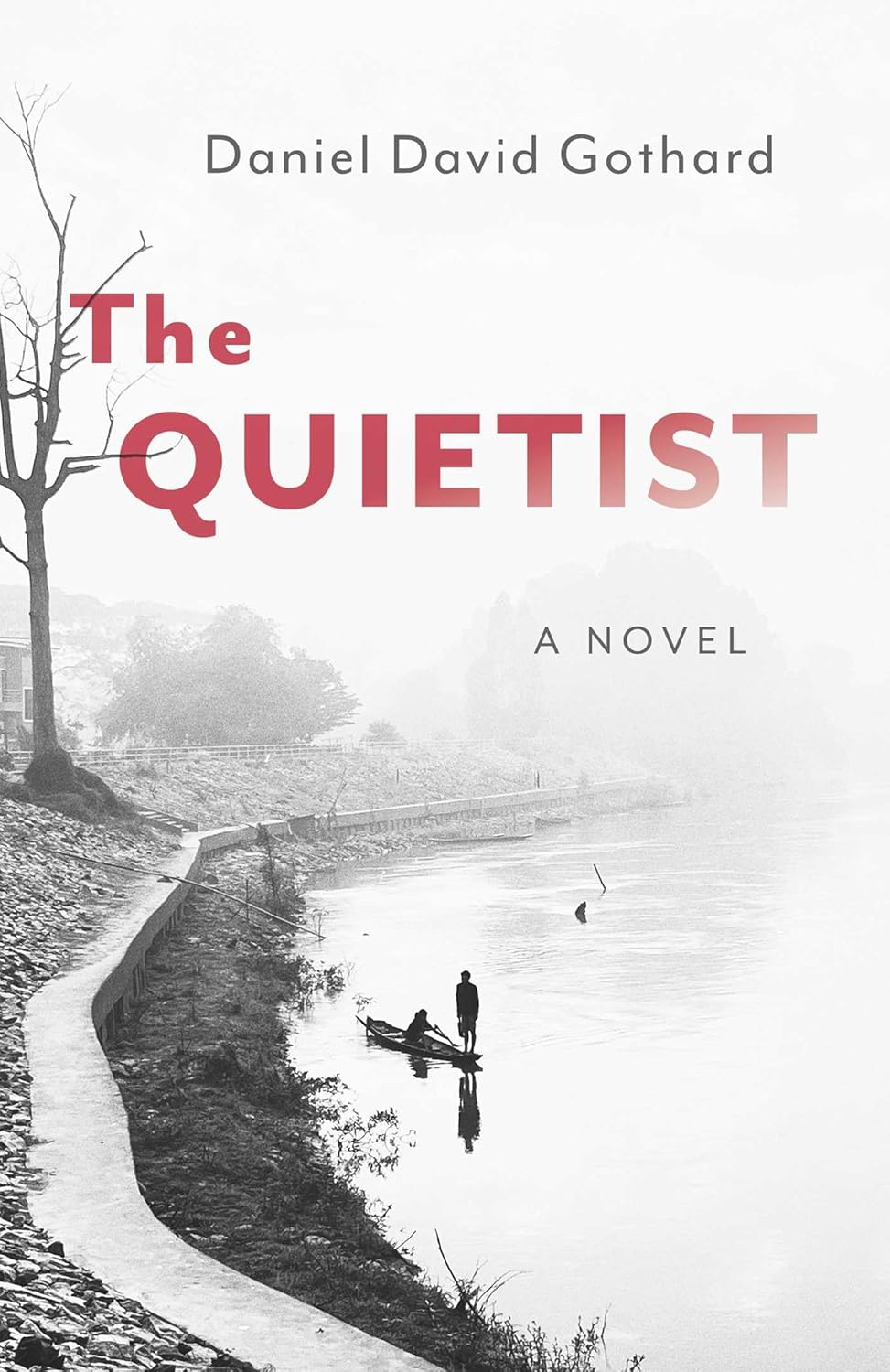
Our life experiences shape who we are, but when it comes to the trauma and grief we will all experience in our live it can be devasting, sometimes having a negative effect and even reshape us as a person from the inside out. These events unsettle our routines, distort our memories (for good or bad) and leave behind a version of life that feels unfamiliar and fragile. While we do recover from these events and get on with life, it is rarely straightforward; it’s a slow, uneven process littered with moments of clarity, setbacks and the quiet hope that healing is achievable. Literature is good at exploring this emotional rollercoaster and can offer comfort, recognition, understanding and insight – not because it provides easy answers, or even the answer you want, but because it acknowledges the complexity of surviving the unimaginable and having to get up and carry on. The Quietist, by Daniel David Gothard, sits firmly within this genre. It is a novel that doesn’t sensationalise trauma, nor does it rush its characters toward an easy, happy-ever-after resolution. Instead, it offers a thoughtful and unsettling exploration of grief, guilt and the ways people try, and sometimes fail, to rebuild themselves after tragedy.
The Quietist kicks off with a devastating motorway accident that kills nearly 30 people, including the partners of Patrick Hawton and Catherine Stannard. Both survive with injuries, but survival comes with other burdens: the weight of trauma, the disorientation of grief and the uncomfortable reality of being alive when someone they loved is not. This shared tragedy to leads to the bringing together of Catherine and Patrick under the care of Dr Lanning, a therapist whose own motivations and emotional wounds gradually come into focus. What begins as a clinical attempt to treat PTSD soon becomes a tangled, intimate study of three people who are dealing with loss, grief and trauma in very different ways.
Overall, The Quietist is an interesting and thought‑provoking novel that examines the human psyche. It is a powerful read, written with an honesty and compassion that readers will be able to relate to around the difficulties overcoming personal grief and traumatic experiences. A story that will stay with you long after the final page, not because it shocks, but because it understands the struggles of dealing with grief and how people deal (or not) with it in their own way. It understands the quiet devastation of loss, the fragile hope of recovery and the complicated, often uncomfortable ways people try to move forward when the world they knew has disappeared.
The book looks at three characters who are dealing with grief in their very different ways, but the portrayal of trauma is nuanced and grounded. Catherine’s grief tangible and very apparent; paralysing, raw and all-consuming – the kind that makes everyday life feel impossible. Patrick, on the other hand, responds with flippant frenetic energy, making impulsive decisions that mask his internal turmoil. The contrasting reactions of Patrick and Catherine superbly highlight that there is no single “correct” way to grieve and that everybody struggles with loss in their own way. And then there is Dr Lanning, who is a quietly tragic figure (a figure that I thought was quite weak). Initially he was the authoritative figure, the professional anchor for both his patients, but as the story progresses and evolves he slowly starts to reveal his own unresolved grief, which starts to blur the boundaries between healer and patient. His desire to use his patients grief to study, for personal and professional gain, adds a layer of ethical tension, while exposing his desperation to find meaning in his own loss.
With their therapy taking the form of shared sessions, the only two survivors of horrific trauma, Catherine and Patrick start to connect in a way Dr Lanning doesn’t like, their connection feels both inevitable and unsettling. With their bond born from a shared pain rather than compatibility, their relationship never comes across as romanticised; instead, it is portrayed as a coping mechanism, a fragile lifeline that helps them step out of the shadows of their former lives. Their ever-increasing closeness for each other forces Dr Lanning to confront his own limitations and with the power dynamic changing course it creates a quiet but persistent sense of unease.
I enjoyed the style of writing – it is not a long novel but can be quite intense and very hard to put down. It moves between internal thoughts, conversations and small but significant actions, creating a rhythm that mirrors the unpredictable nature of recovery, superbly reflecting the fractured mental states of the characters. This results in a story that feels quite intimate, emotional and draws the reader into the tale.
If you are looking for a story that offers a neat ending, this isn’t it. The Quietist is particularly compelling due to its refusal to offer the perfect happy-ever-after resolutions. Grief is messy. Trauma lingers. Healing is partial at best. With that said, this novel is anything but bleak. Instead, it acknowledges the possibility of connection, understanding and gradual change. It demonstrates that while tragedy change a life, it does not have to define it entirely.
A sombre and very interesting read.
Rating: 5/5
RRP: £11.99 (Paperback) / £7.74 (Kindle)
Available to buy from Amazon here.
 AUTHOR: Daniel David Gothard
PUBLISHER: Roundfire Books
PUBLICATION DATE: 26 August 2025
ISBN: 978-1803418858
PRINT LENGTH: 152 Pages